

For international buyers looking for home appliance suppliers in China, the Canton Fair remains an important place to discover manufacturers, compare products, discuss OEM and ODM projects, and establish long-term supply relationships.
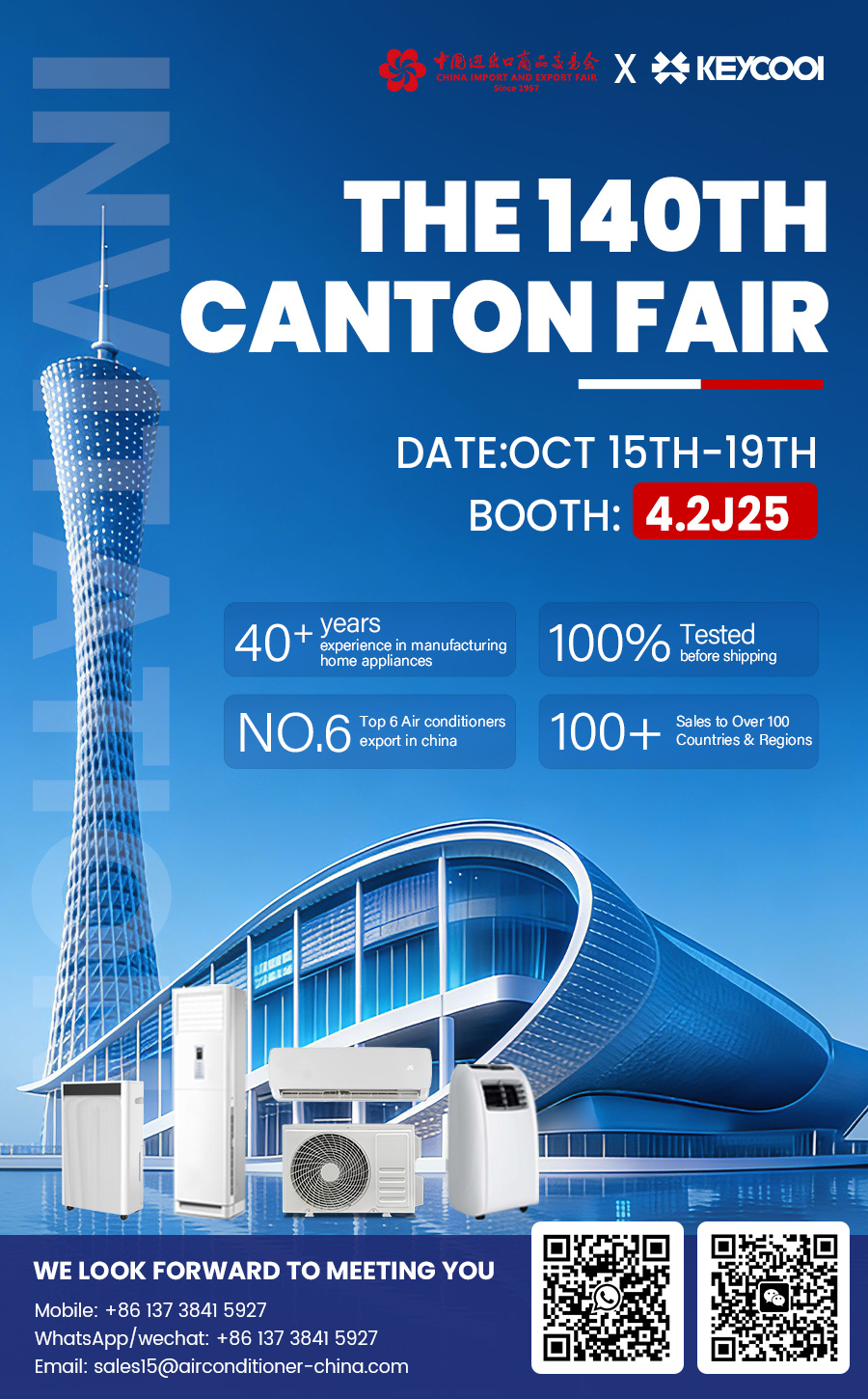
The 140th Canton Fair will be held in Guangzhou in three phases from October 15 to November 4, 2026. The first phase, scheduled for October 15–19, focuses on advanced manufacturing and includes the Household Electrical Appliances exhibition category, making it particularly relevant to buyers sourcing air conditioners, refrigerators and other major home appliances.
However, visiting a trade show is only the beginning. With thousands of exhibitors and a wide range of products, the more important question for an international buyer is:
How do you identify a reliable home appliance manufacturer in China rather than simply another trading supplier?
What Can International Buyers Find at the Canton Fair?
The Canton Fair brings together manufacturers and international buyers across a wide range of industries. For home appliance buyers, the first phase is particularly relevant because it includes household electrical appliances alongside electronics, electrical products, new energy products and other manufacturing categories.
For buyers sourcing major appliances, typical sourcing requirements may include:
-
Air conditioners
-
Refrigerators
-
Freezers
-
Washing machines
-
Dehumidifiers
-
Electric heating products
-
Other household electrical appliances
The exhibition provides an opportunity to compare product designs, specifications, production capabilities and supplier services in person.
But product appearance alone should not determine your supplier selection.
A professional sourcing process should also examine the manufacturer’s production capability, OEM and ODM experience, quality control system, certifications, order capacity, lead time and after-sales support.
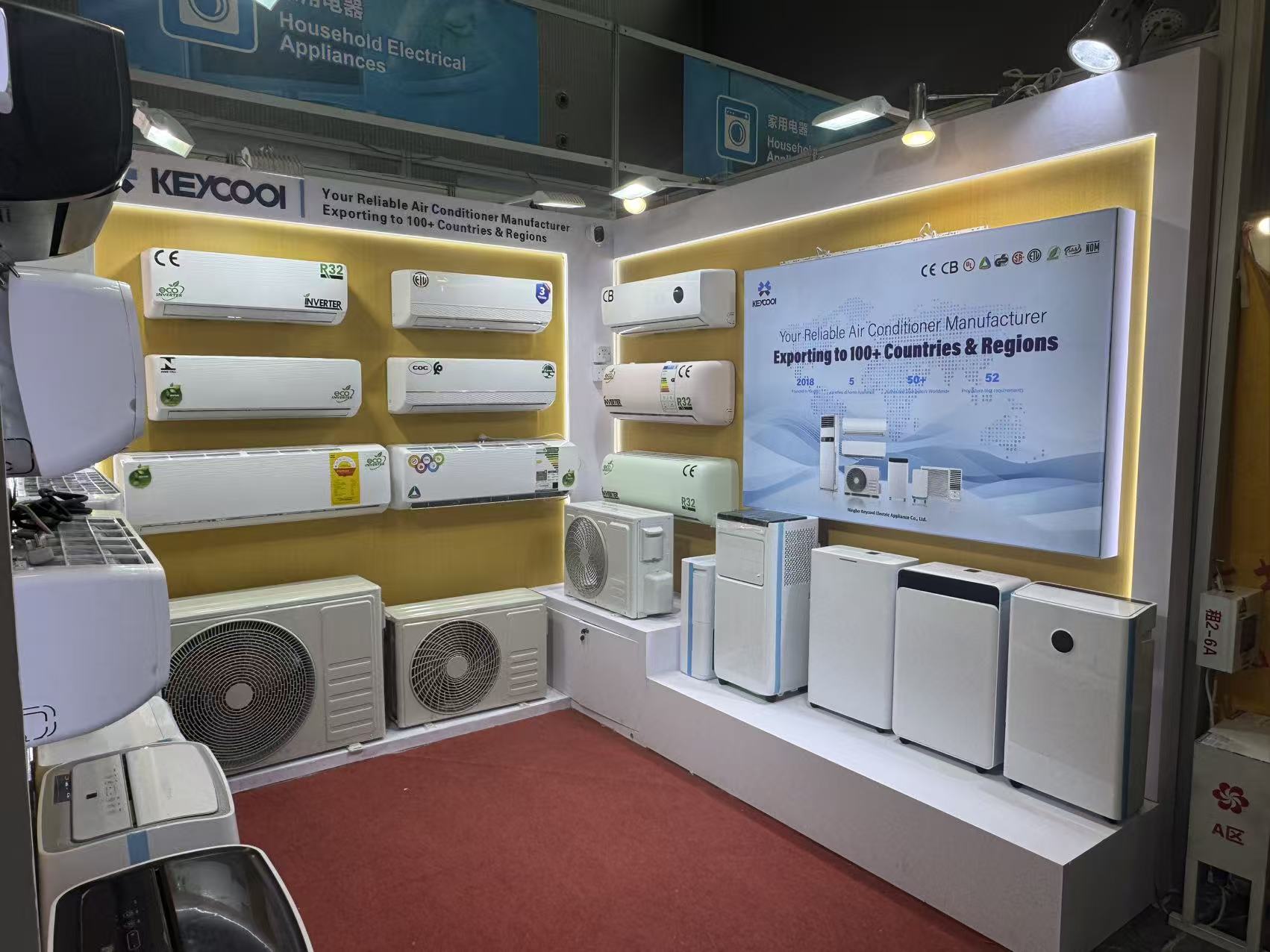
How to Find a Reliable Home Appliance Manufacturer at the Canton Fair
1. Look Beyond the Product Catalog
A large product catalog does not necessarily mean that a supplier has strong manufacturing capabilities.
When meeting a potential home appliance supplier, international buyers should ask where the products are manufactured, which components are produced internally, how quality control is managed, and whether the company supports customized production.
A reliable home appliance manufacturer should be able to provide clear information about its manufacturing process and explain how it manages quality from component sourcing through final assembly.
For buyers planning long-term cooperation, this information can be more valuable than simply comparing unit prices.
2. Ask About OEM and ODM Capabilities
OEM and ODM are two common cooperation models for international appliance buyers.
With OEM manufacturing, the buyer generally provides product specifications, branding requirements or other defined requirements, while the manufacturer produces the products accordingly.
With ODM manufacturing, the manufacturer can provide more support in product design, development and engineering solutions.
The appropriate model depends on the buyer’s business model.
For example, an established appliance brand may already have detailed product specifications and mainly require an experienced home appliance OEM manufacturer.
A distributor or emerging brand may instead need a manufacturer that can provide product development and customization support through an ODM home appliance manufacturing model.
Before placing an order, buyers should therefore clarify:
-
Product specifications
-
Branding requirements
-
Packaging
-
Product appearance
-
Functional requirements
-
Certification requirements
-
Target market
-
MOQ
-
Production lead time
This helps both sides determine whether the project is suitable for OEM, ODM or a combination of both.
3. Evaluate Manufacturing Capability
A factory visit or detailed supplier discussion can help buyers understand whether a company has the manufacturing infrastructure required for long-term cooperation.
Important areas to evaluate include:
Production capability
Can the manufacturer handle your expected order volume?
Engineering capability
Can the supplier modify existing products or develop products according to your requirements?
Quality control
Does the manufacturer have systematic testing and inspection procedures?
Supply chain management
Can the company maintain stable component sourcing and production schedules?
Export experience
Does the supplier understand international packaging, documentation, logistics and market-specific requirements?
For major appliances, these factors can directly affect product consistency and delivery reliability.
OEM Home Appliances: What Should Buyers Check?
For buyers searching for OEM home appliances, the evaluation process should go beyond the logo and packaging.
A professional OEM project may involve product specifications, appearance customization, branding, packaging design, components, software or control functions, certifications and market requirements.
Before confirming cooperation, buyers should ask the manufacturer for a clear explanation of the OEM process.
A typical process may include:
Requirement Confirmation → Product Selection → Sample Development → Testing & Approval → Mass Production → Inspection → Shipment
This process gives both the buyer and manufacturer an opportunity to identify technical or commercial issues before mass production begins.
For new buyers, requesting samples before placing a large order can also provide valuable information about actual product quality, packaging and product performance.
MOQ and Production Lead Time Matter
MOQ is another important consideration when comparing Chinese appliance suppliers.
There is no universal MOQ for every home appliance manufacturer or every product. MOQ may depend on the product model, customization requirements, packaging, production planning and order quantity.
For example, some current KEYCOOL air conditioner product listings specify an MOQ of 1 × 40HQ for each model. The exact MOQ should be confirmed according to the selected model and project requirements.
Production lead time should also be discussed before confirming an order.
Instead of asking only for the fastest possible delivery date, buyers should ask the supplier to explain the expected production schedule after order confirmation and deposit.
A clear production schedule can help importers coordinate shipping, warehouse planning and market launch activities.
Certifications Should Match Your Target Market
Different countries and regions may have different regulatory and certification requirements for home appliances.
Therefore, international buyers should identify their target market before selecting a product.
Depending on the destination market and product category, buyers may need to consider requirements related to electrical safety, energy efficiency, electromagnetic compatibility, environmental regulations and other applicable standards.
A professional supplier should be able to discuss the certification requirements relevant to the product and target market.
However, buyers should always confirm the final applicable requirements with the relevant authorities, certification bodies or qualified compliance professionals in their destination market.
Why Factory Experience Matters for International Buyers
Buying home appliances internationally involves more than manufacturing.
A supplier needs to understand international logistics, export documentation, packaging requirements, communication, quality inspection and after-sales support.
This is particularly important for large appliances because transportation, installation, spare parts and warranty requirements can be more complex than for smaller consumer products.
For this reason, buyers should consider the manufacturer’s experience with international markets and similar projects rather than evaluating suppliers only by their factory price.
KEYCOOL at the Canton Fair: From Product Sourcing to OEM Manufacturing
For buyers looking for a home appliance manufacturer in China, KEYCOOL provides OEM and ODM manufacturing solutions for international brands, distributors and importers.
KEYCOOL’s appliance manufacturing business covers major home appliance categories, including air conditioners and other household electrical appliances.
The company states that its business dates back to 1983 and that its manufacturing capabilities cover areas including R&D, sheet metal processing, injection molding, quality control and final assembly.
For air conditioning, KEYCOOL also states that its business serves customers in more than 150 countries and regions.
For buyers, this means that a sourcing discussion does not have to stop at selecting an existing product.
Depending on the project, cooperation can cover:
-
Product selection
-
OEM customization
-
ODM development
-
Private label production
-
Packaging customization
-
Sample development
-
Quality inspection
-
Spare parts support
-
CKD/SKD solutions
-
Production and shipment coordination
The specific scope of customization, MOQ, lead time and certification requirements should be confirmed according to the individual project.
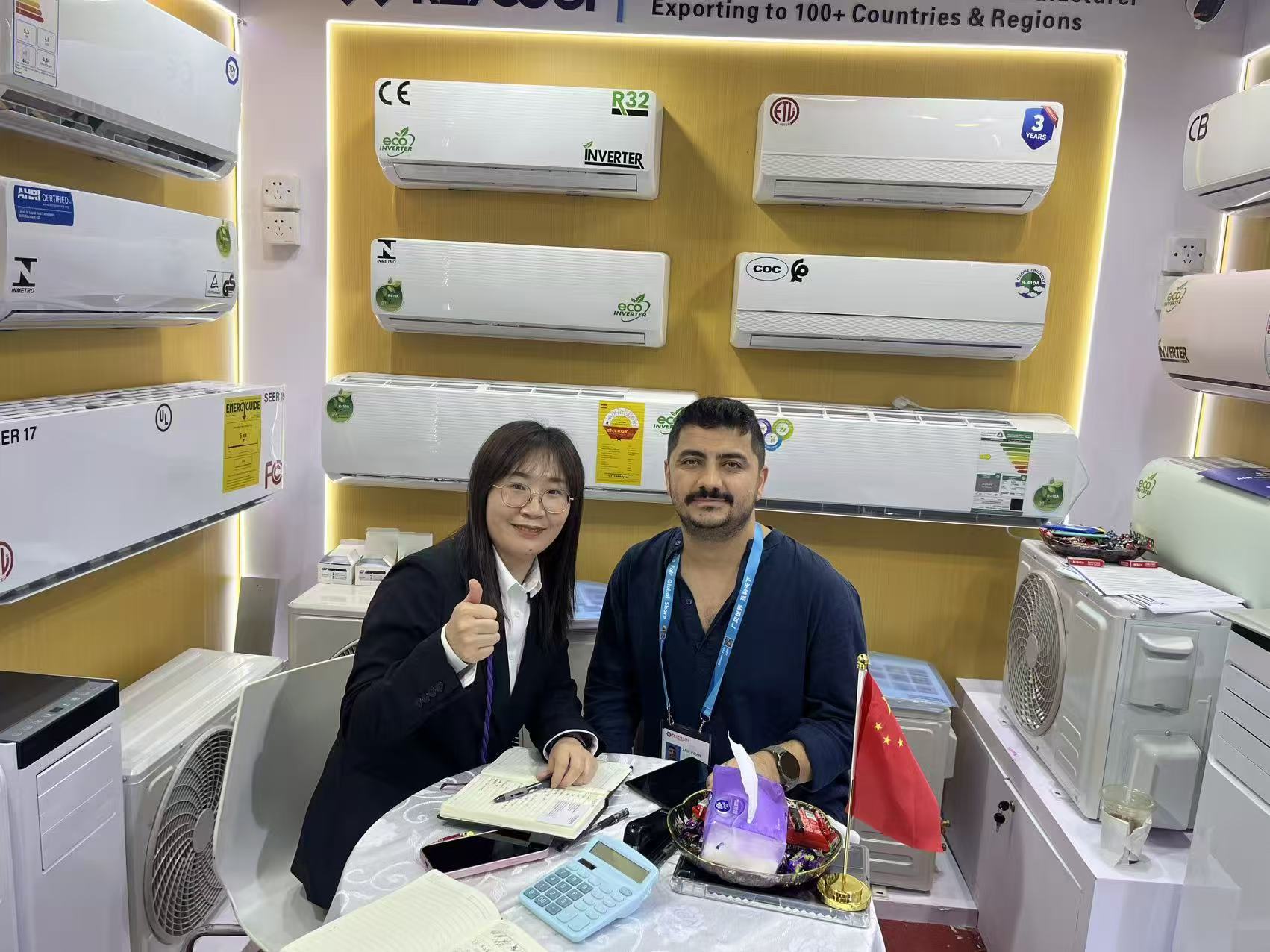
What Should You Prepare Before Visiting the Canton Fair?
To make supplier meetings more productive, buyers should prepare their sourcing requirements before arriving at the exhibition.
A basic sourcing brief can include:
Product category:
Air conditioner, refrigerator, freezer, washing machine or other appliance.
Target market:
Country or region where the products will be sold.
Product specifications:
Capacity, dimensions, energy efficiency, functions and other technical requirements.
Branding:
OEM logo, packaging and private label requirements.
Estimated quantity:
Expected trial order and annual purchasing volume.
Certification:
Required standards or certifications for the target market.
Delivery requirements:
Preferred shipment schedule and destination port.
Cooperation model:
OEM, ODM, private label or standard product sourcing.
With these details prepared, buyers can compare different suppliers more efficiently and have more focused discussions with manufacturers.
Questions to Ask a China Home Appliance Manufacturer
When visiting the Canton Fair or contacting a supplier after the exhibition, consider asking:
-
Are you a manufacturer or trading company?
-
Which products do you manufacture directly?
-
Do you provide OEM and ODM services?
-
What is the MOQ for this model?
-
Can you provide samples?
-
What is the standard production lead time?
-
Which markets do you currently export to?
-
What certifications are available?
-
How is product quality tested?
-
What warranty and spare parts support do you provide?
-
Can you customize packaging and branding?
-
Can you support CKD or SKD projects?
-
Can we arrange a factory visit or third-party inspection?
-
What information do you need to prepare a quotation?
Asking the same questions to several potential suppliers can make supplier comparison more structured and reduce the risk of choosing a manufacturer based only on price.
From Canton Fair Meeting to Long-Term Cooperation
A successful trade show meeting is only the first step.
After the Canton Fair, buyers should normally move through a structured supplier evaluation process:
Supplier Screening → Product Selection → Sample Evaluation → Commercial Negotiation → Factory Audit → Order Confirmation → Mass Production → Inspection → Shipment
For major appliance projects, taking time to verify the supplier before mass production can help reduce avoidable risks.
The goal should not simply be to find the lowest quotation.
Instead, international buyers should look for a manufacturing partner that can support their product requirements, quality standards, delivery schedule and future business growth.
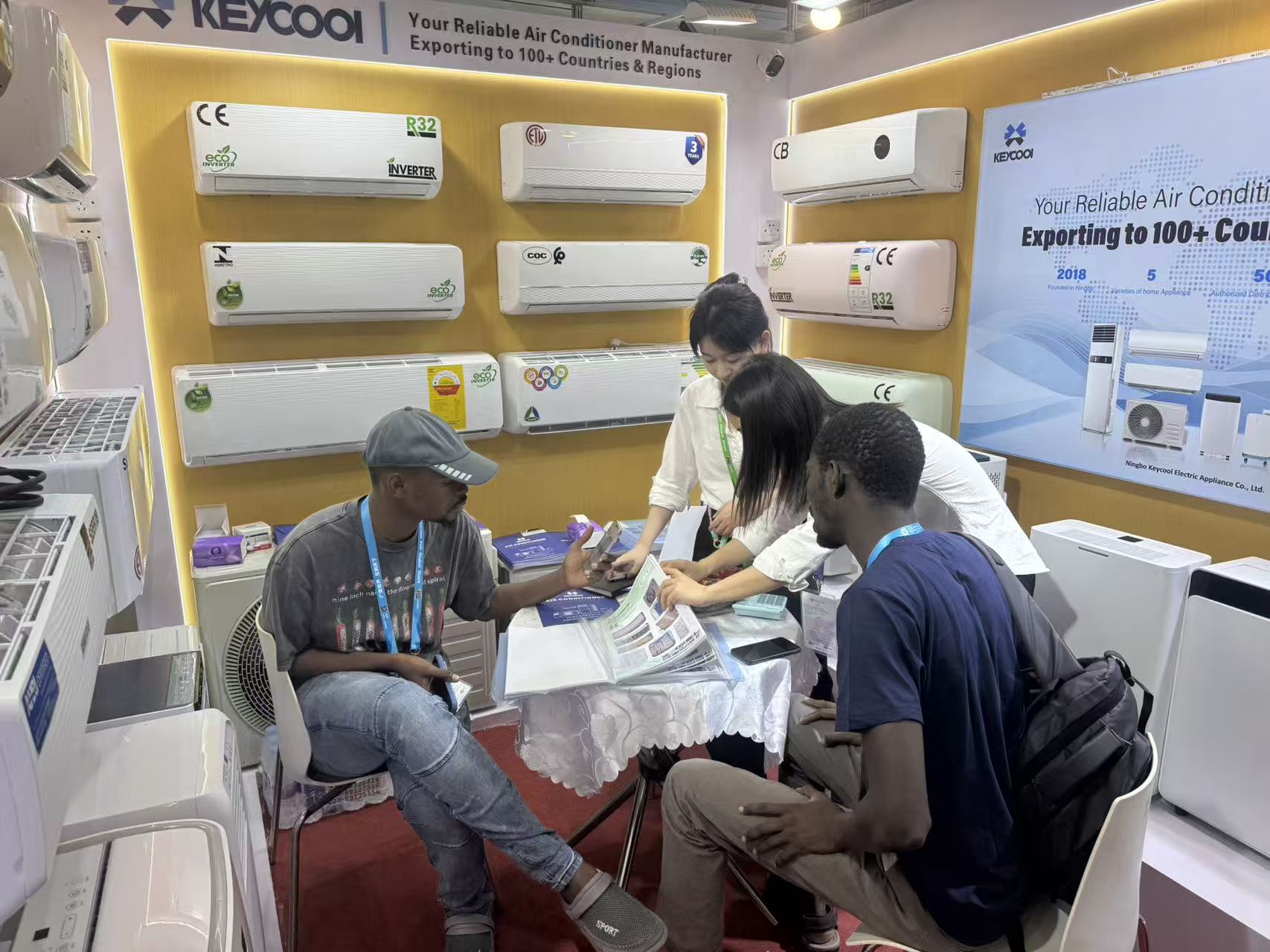
Looking for a Home Appliance Manufacturer in China?
If you are visiting the Canton Fair and are sourcing air conditioners, refrigerators or other major home appliances, KEYCOOL can discuss your OEM and ODM requirements.
Whether you are an importer, distributor, retailer or appliance brand, you can provide your target market, product requirements and estimated purchasing volume.
Our team can then evaluate the appropriate product and manufacturing solution for your project.
Looking for a reliable China home appliance manufacturer for your next project?
Contact KEYCOOL to discuss your OEM/ODM requirements.
Frequently Asked Questions
When is the Canton Fair 2026?
The 140th Canton Fair will be held in Guangzhou in three phases: October 15–19, October 23–27, and October 31–November 4, 2026. Household electrical appliances are included in Phase 1.
Which phase of the Canton Fair is relevant for home appliances?
Household electrical appliances are included in Phase 1 of the Canton Fair. The 140th Canton Fair Phase 1 will take place from October 15 to 19, 2026.
How can I find a home appliance manufacturer in China?
Buyers can meet suppliers at the Canton Fair, search manufacturer websites, request product and factory information, evaluate OEM/ODM capabilities, check certifications and conduct factory or third-party inspections before placing an order.
Can Chinese home appliance manufacturers provide OEM services?
Yes. Many Chinese appliance manufacturers provide OEM services, although the available customization, MOQ, tooling requirements and production capabilities vary by manufacturer and product.
What should I prepare before contacting an appliance manufacturer?
Prepare your target market, product category, technical specifications, estimated order quantity, branding requirements, certification requirements and expected delivery schedule. This information allows manufacturers to provide a more accurate quotation and project assessment.
Can KEYCOOL provide OEM and ODM home appliance manufacturing?
KEYCOOL provides OEM and ODM solutions for international appliance customers. The specific product, customization scope, MOQ, lead time and certification requirements should be confirmed according to each project.
Post time: Sep-30-2026