

For a household, the electricity consumed by a refrigerator may seem relatively small compared with larger appliances. For a distributor, retailer, hotel, supermarket, or appliance brand, however, energy efficiency can become a much more important purchasing consideration. A refrigerator operates continuously, often 24 hours a day and 365 days a year. When hundreds or thousands of units are installed across a market, even a modest difference in annual energy consumption can have a meaningful effect on operating costs.
This is why choosing an energy-efficient refrigerator should not be based only on the number of stars shown on an energy label or the purchase price offered by a manufacturer. For B2B buyers, the more useful question is: how much energy will this refrigerator consume under its intended operating conditions, and what does that mean for the total cost of ownership?
For OEM and private-label buyers, the answer depends on much more than the refrigerator’s appearance. Cooling system design, compressor selection, insulation, cabinet size, ambient temperature, door-opening frequency, control strategy, and even the way the finished product is tested can all influence energy consumption.
Look Beyond the Energy Rating
Energy labels are useful because they provide a standardized way to compare appliances. However, an energy rating should not be considered in isolation.
A larger refrigerator may have a higher energy-efficiency rating while consuming more electricity every year than a smaller model with a lower rating. For B2B buyers, annual energy consumption in kWh is therefore a more useful starting point than simply comparing the number of stars.
The right comparison is to evaluate refrigerators with similar capacity, configuration, cooling technology, and intended application, then compare their tested or declared annual energy consumption.

For example, when comparing two refrigerators for a private-label project, a buyer should look at:
| Evaluation Factor | Why It Matters |
|---|---|
| Rated capacity | Larger cabinets generally require more cooling energy |
| Annual energy consumption | Provides a direct basis for operating-cost comparison |
| Energy-efficiency rating | Useful when comparing products within the same market and category |
| Refrigerant | Affects system design, environmental performance, and regulatory compliance |
| Compressor | Directly influences cooling performance and energy consumption |
| Insulation | Reduces heat transfer through the cabinet |
| Ambient temperature | Higher surrounding temperatures increase cooling demand |
| Cooling system | Different architectures have different efficiency characteristics |
| Control system | Thermostatic and electronic control affect compressor operation |
| Door-opening frequency | Frequent openings increase the cooling load |
For an OEM project, these factors should be evaluated together rather than selecting a product based on one specification.
Refrigerator Efficiency Depends on the Climate
One of the most important factors for international appliance buyers is the environment in which the refrigerator will operate.
A refrigerator installed in a mild indoor environment does not face the same thermal conditions as one operating in a hot retail store, warehouse, kitchen, or residential building in a tropical market.
As ambient temperature increases, the refrigeration system generally needs to work harder to remove heat from the cabinet. This can increase compressor running time and overall energy consumption.
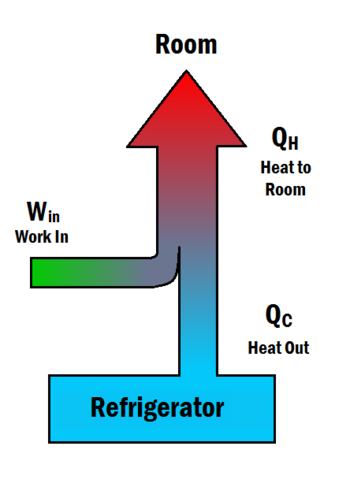
This is particularly relevant for exporters and distributors selling into markets with hot climates. A refrigerator designed and tested primarily for moderate ambient conditions may not deliver the same real-world performance when installed in a high-temperature environment.
For this reason, B2B buyers should consider the intended climate class and operating environment when selecting a refrigerator OEM supplier. The relevant question is not simply whether a refrigerator has a good energy rating, but whether its refrigeration system is appropriately designed for the market where it will be sold.
The Compressor Is at the Heart of Refrigerator Efficiency
The compressor is one of the most important components affecting refrigerator performance.
Its job is to circulate refrigerant through the refrigeration system and maintain the required pressure difference between the high- and low-pressure sides. During normal operation, the compressor starts and stops or adjusts its operating condition according to the refrigeration demand.
A well-matched compressor can help the system achieve the required cooling capacity without unnecessary energy consumption.
For OEM buyers, compressor selection should therefore be evaluated as part of the entire refrigeration system rather than as an isolated component. Compressor capacity, refrigerant compatibility, operating conditions, condenser and evaporator design, and control strategy all need to work together.
This is particularly important when developing private-label refrigerators for different markets. A compressor and refrigeration system that performs well in one cabinet configuration may not necessarily provide the same results after changes to capacity, insulation, refrigerant, or operating conditions.
A capable OEM manufacturer should be able to explain how the compressor is matched to the refrigerator platform and target operating conditions.
Insulation Has a Direct Impact on Cooling Load
The cabinet insulation is another fundamental part of refrigerator energy performance.
The refrigerator needs to maintain a temperature significantly different from the surrounding environment. The greater the temperature difference, the more important thermal insulation becomes.
Good insulation reduces heat transfer from the surrounding environment into the refrigerated compartment. This allows the cooling system to maintain the required temperature with less refrigeration work.
For manufacturers, this means insulation cannot simply be considered a cosmetic or structural detail. Material selection, insulation thickness, cabinet construction, door sealing, and manufacturing consistency all contribute to thermal performance.

In many modern refrigerators, polyurethane foam insulation is used because it provides effective thermal resistance while allowing the cabinet to remain relatively compact.
For B2B buyers, the important point is that insulation performance should be considered together with the overall cabinet design. Simply increasing insulation thickness does not automatically produce the best product. The manufacturer needs to balance thermal performance, internal capacity, material consumption, cabinet dimensions, production process, and cost.
No-Frost and Direct Cooling Have Different Energy Considerations
The cooling system itself also affects refrigerator energy consumption.
Direct-cooling refrigerators generally have a relatively straightforward refrigeration architecture, while No-Frost systems use forced air circulation and additional components to distribute cold air and manage frost formation.
No-Frost technology can provide advantages such as more uniform temperature distribution and reduced manual defrosting. However, its additional components, including fans and control systems, also need to be considered when evaluating overall energy consumption.
For B2B buyers, there is therefore no universal answer to the question of which cooling system is “more efficient.” The right choice depends on the refrigerator category, capacity, target market, expected usage, and required product features.
An OEM manufacturer should be able to recommend the appropriate cooling architecture based on the product specification rather than simply offering the same refrigeration platform for every project.
Product Size Matters More Than Many Buyers Expect
When comparing refrigerator efficiency, capacity must always be taken into account.
A large refrigerator naturally has a larger internal volume that needs to be cooled. It also has a larger cabinet surface area through which heat can enter. As a result, comparing two products only by their energy rating can produce misleading conclusions if their capacities and configurations are significantly different.
For B2B buyers, a better approach is to compare products within the same capacity range and application category.
For example, when sourcing refrigerators for a retail or private-label program, compare:
Similar capacity + similar configuration + similar cooling technology + similar market requirements
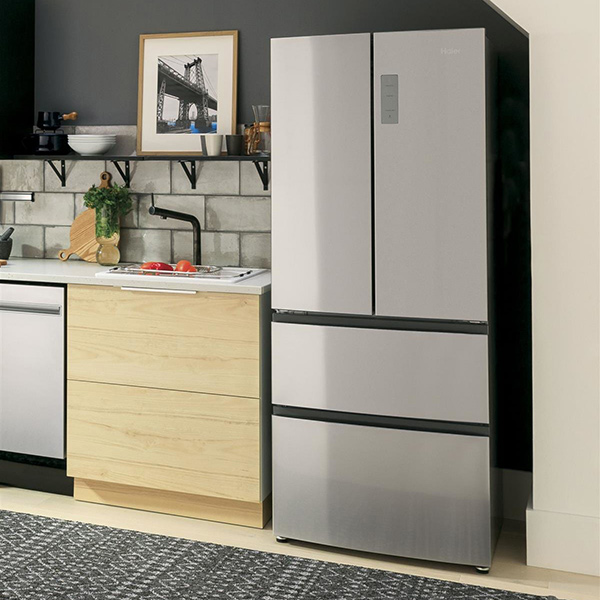
before using energy consumption as a deciding factor.
This creates a much more meaningful comparison between suppliers.
Energy Efficiency Is Also a Manufacturing Issue
For an OEM refrigerator project, energy efficiency is not created at the final inspection stage. It is influenced throughout the product development and manufacturing process.
The refrigeration system must be correctly designed and assembled. Insulation must be applied consistently. Door seals need to provide adequate sealing performance. Electrical components and controls must operate reliably. Refrigerant charging must meet the required specifications. The completed unit must then undergo appropriate performance and safety testing.
This is why choosing an OEM refrigerator manufacturer requires more than comparing catalog specifications.
A supplier may offer an attractive-looking refrigerator with a competitive factory price, but if its production process cannot consistently maintain refrigeration performance, insulation quality, sealing performance, or refrigerant charge accuracy, the final product may not deliver the expected performance in the market.
For private-label buyers, manufacturing capability therefore becomes part of energy-efficiency management.
Think About Total Cost, Not Just Factory Price
The lowest purchase price is not always the lowest-cost solution.
Imagine two refrigerator models with similar capacities. Model A has a lower factory price but consumes more electricity every year. Model B costs more to manufacture but uses less energy during operation.
For a distributor selling the appliance, the electricity cost may ultimately be paid by the end customer. A more efficient product can therefore become a stronger market proposition, particularly in regions where electricity prices are high or energy-efficiency regulations are becoming more demanding.
For commercial users operating multiple refrigerators, the difference can become even more significant.
If a business operates 500 refrigerators and each unit consumes 100 kWh less electricity per year, the fleet saves:
500 × 100 kWh = 50,000 kWh per year
The actual financial saving depends on the local electricity price, operating conditions, and measured product performance, but the principle is straightforward: small efficiency differences at the product level can become substantial when multiplied across a large installed base.
This is one reason energy efficiency deserves attention during the OEM product-selection stage rather than being treated as a marketing specification after production has already been finalized.
Energy Efficiency Should Be Evaluated Over the Product Lifecycle
A refrigerator is a long-term appliance. Its purchase price is paid once, but its energy consumption continues throughout its operating life.
For B2B buyers, this creates an important distinction between purchase cost and lifecycle cost.
A useful way to think about the economics is:
Total Cost of Ownership = Purchase Cost + Energy Cost + Maintenance Cost + Other Operating Costs
The exact calculation depends on the market and product category, but the principle can be applied to almost every refrigerator procurement project.
If a product is intended for a supermarket, hotel, convenience store, restaurant, or other commercial environment, operating hours and utilization can make energy efficiency particularly important.
For private-label brands, this also creates an opportunity to position energy efficiency as part of the product’s long-term value rather than simply competing on initial price.
Inside our refrigerator factory

What B2B Buyers Should Ask a Refrigerator OEM Manufacturer
Before placing an OEM order, buyers should ask the manufacturer for technical information that allows a meaningful comparison between products.
Useful questions include:
-
What is the rated capacity of the refrigerator?
-
What is the annual or measured energy consumption?
-
Which refrigerant is used?
-
What compressor platform is used?
-
What cooling system does the model use?
-
What insulation material and cabinet construction are used?
-
What ambient operating conditions has the product been designed for?
-
What energy-efficiency standards or regulations does the model target?
-
What performance testing is conducted before shipment?
-
Can the refrigerator be customized for a specific market?
-
Can the manufacturer provide technical documentation and test reports?
-
Can the same platform be adapted for different capacities or configurations?
The answers can reveal much more about a supplier’s technical capability than a product catalog alone.
Why OEM Capability Matters for Energy-Efficient Refrigerators
For a brand or distributor developing a private-label refrigerator, energy efficiency is rarely a single-component problem.
Changing the cabinet size can affect the refrigeration load. Changing the refrigerant can require different system components. Changing the compressor can affect cooling capacity and energy consumption. Changing the insulation can affect both internal capacity and thermal performance. Changing the target market can also change the required standards and operating conditions.
A strong OEM partner should therefore be able to coordinate these elements as one product-development system.
At KEYCOOL, our OEM/ODM approach supports buyers who need more than a standard off-the-shelf refrigerator. Product requirements can be developed around the intended market, capacity, configuration, performance requirements, and branding needs, followed by sample development, production, quality control, and shipment coordination.
This type of cooperation allows distributors, retailers, importers, and private-label brands to develop refrigeration products around their actual business requirements instead of simply selecting the closest model from a standard catalog.
How to Compare Refrigerator Suppliers: A Practical B2B Framework
When evaluating several manufacturers, it can be useful to score suppliers across several categories rather than selecting the lowest quotation.
| Category | What to Evaluate |
|---|---|
| Product Performance | Cooling performance, temperature stability, energy consumption |
| Refrigeration System | Compressor, refrigerant, evaporator, condenser and system matching |
| Cabinet Design | Insulation, sealing, internal volume and structural quality |
| Manufacturing | Production capacity, process control and assembly capability |
| Quality Control | Performance testing, leak testing and finished-product inspection |
| Certifications | Compliance with the regulations of the target market |
| OEM/ODM | Logo, appearance, specifications and platform customization |
| Documentation | Technical specifications, test reports and product materials |
| Commercial Terms | MOQ, lead time, packaging and shipping requirements |
| After-Sales | Warranty policy, spare parts and technical support |
This approach helps buyers compare the total supplier capability, rather than allowing a small difference in factory price to dominate the decision.
Final Thoughts: The Most Efficient Refrigerator Is the Right Refrigerator for the Market
Energy efficiency is becoming an increasingly important consideration in refrigerator purchasing, but there is no single specification that determines whether a refrigerator is the right choice.
The best product depends on its capacity, cooling system, compressor, insulation, ambient operating conditions, target market requirements, expected usage, and lifecycle cost.
For B2B buyers, the goal should therefore be to find a refrigerator platform that combines reliable cooling performance, appropriate energy efficiency, regulatory compliance, manufacturing consistency, and commercial value.
For an OEM or private-label project, this evaluation should begin before the product enters mass production. The earlier the manufacturer and buyer align on the target market, technical requirements, energy performance, and product configuration, the easier it becomes to develop a refrigerator that is competitive not only at the factory gate, but throughout its operating life.
Looking for an OEM refrigerator manufacturer for your next project? KEYCOOL supports OEM and ODM appliance projects for international distributors, retailers, importers, and private-label brands. Contact our team to discuss your required capacity, configuration, market, and customization requirements.

Post time: Nov-25-2026