

How to Choose an OEM Refrigerator Manufacturer, Commercial Freezer Factory, or Private Label Refrigeration Supplier
For importers, distributors, supermarket groups, beverage brands, and private-label retailers, sourcing refrigerators and freezers from China involves far more than comparing FOB prices.
A reliable refrigeration OEM program requires buyers to evaluate the cooling system, compressor, insulation, door gasket, energy performance, product configuration, container loading efficiency, certifications, quality control, and the manufacturer’s ability to support customization and long-term production.
This guide explains the main technical and commercial factors buyers should consider when sourcing OEM refrigerators, commercial freezers, chest freezers, beverage coolers, and private-label refrigeration products from China.
What Should B2B Buyers Check When Sourcing Refrigerators and Freezers?
For most international refrigeration procurement projects, five areas should be evaluated before selecting a supplier:
Cooling system → Core components → Energy performance → Production and quality control → OEM customization and supply capability
The right configuration depends on the target market and application. A compact refrigerator for a hotel room may require a very different specification from a commercial glass-door beverage cooler or a large chest freezer for grocery storage.
For this reason, buyers should define the intended application, target market, capacity, temperature requirements, expected order volume, and positioning before comparing manufacturers.
1. No-Frost vs. Direct Cool: Which Refrigerator Cooling System Should Buyers Choose?
The cooling system is one of the first technical decisions in refrigerator sourcing.
The two common configurations are No-Frost / Frost-Free cooling and Direct Cool. They have different advantages in terms of convenience, internal structure, manufacturing cost, and target application.
| Technical Parameter | Total No-Frost / Air Cooling | Direct Cool / Static Cooling | B2B Sourcing Consideration |
|---|---|---|---|
| Defrosting | Automatic defrosting system | Periodic manual defrosting may be required | No-Frost is commonly positioned for mid- to high-tier residential products; Direct Cool can suit price-sensitive applications. |
| Temperature Distribution | Fan-assisted air circulation | Natural temperature stratification | No-Frost can provide more consistent temperature distribution across the cabinet. |
| Usable Storage Space | Internal air ducts may occupy some space | Simpler internal structure | Direct Cool can provide efficient usable volume in compact refrigerator designs. |
| System Complexity | Fan, sensors and defrost-related components | Simpler refrigeration structure | Direct Cool can offer a lower-cost solution where automatic defrosting is not a priority. |
| Typical Applications | Mainstream residential refrigerators | Compact refrigerators and selected freezer applications | The appropriate system depends on market positioning and target users. |
For a B2B buyer, the question is not simply which system is technically better. The more useful question is:
Which cooling system fits the product positioning and target market?
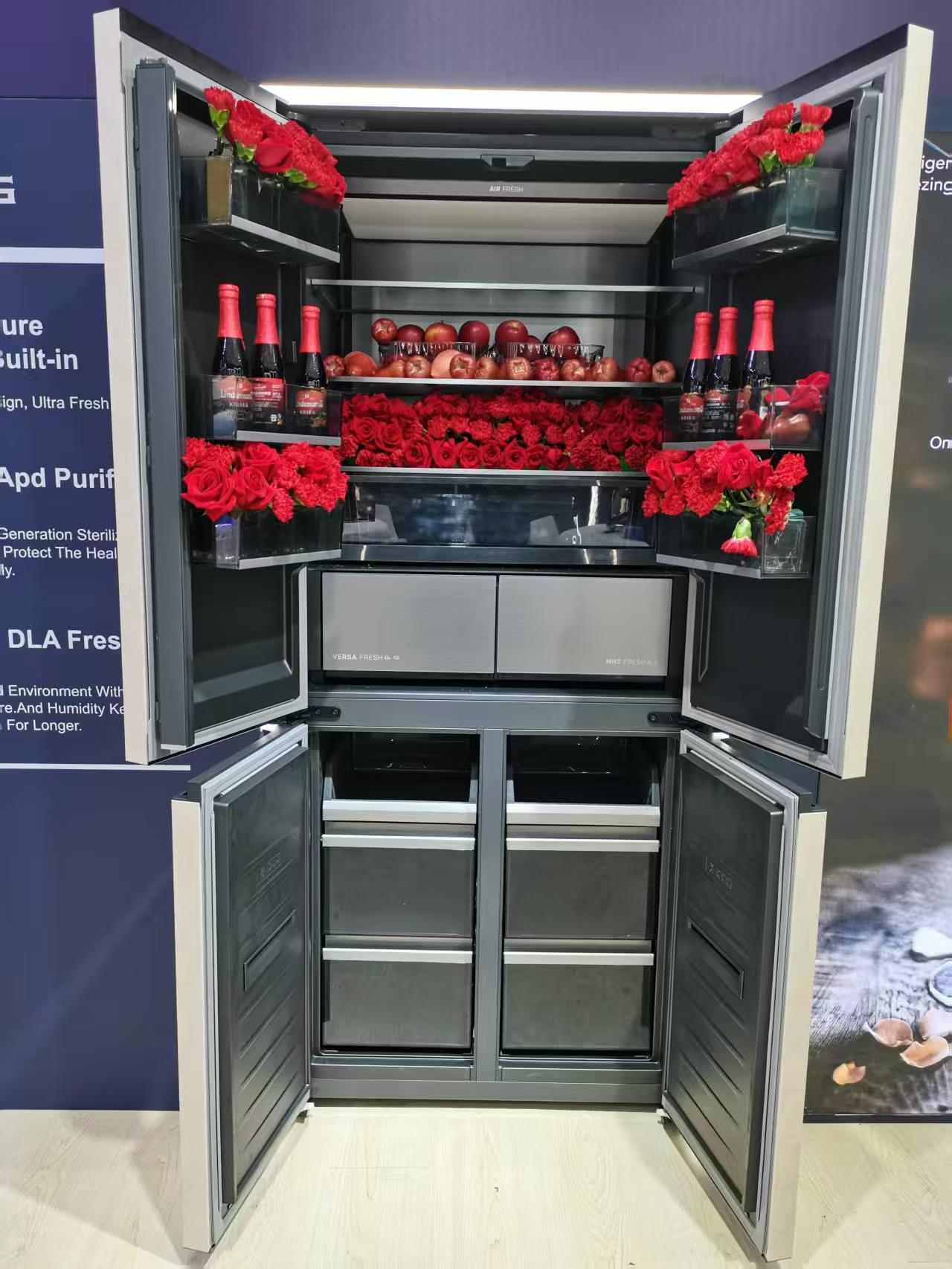
For example, a private-label refrigerator targeting mainstream residential consumers may prioritize automatic defrosting and temperature distribution, while a compact refrigerator designed for hotels, dormitories, offices, or price-sensitive retail markets may prioritize simplicity and usable internal volume.
2. What Components Should Buyers Evaluate in an OEM Refrigerator?
The performance of a refrigerator depends heavily on the components inside the cabinet.
When comparing an OEM refrigerator manufacturer, buyers should pay particular attention to the compressor, insulation system, door gasket, and internal liner.
| Component | Standard / Budget Configuration | OEM Project Considerations | Why It Matters |
|---|---|---|---|
| Compressor | Fixed-frequency or standard compressor | Inverter or high-efficiency compressor options | Compressor efficiency, operating conditions, noise, reliability, and spare-parts availability affect long-term product performance. |
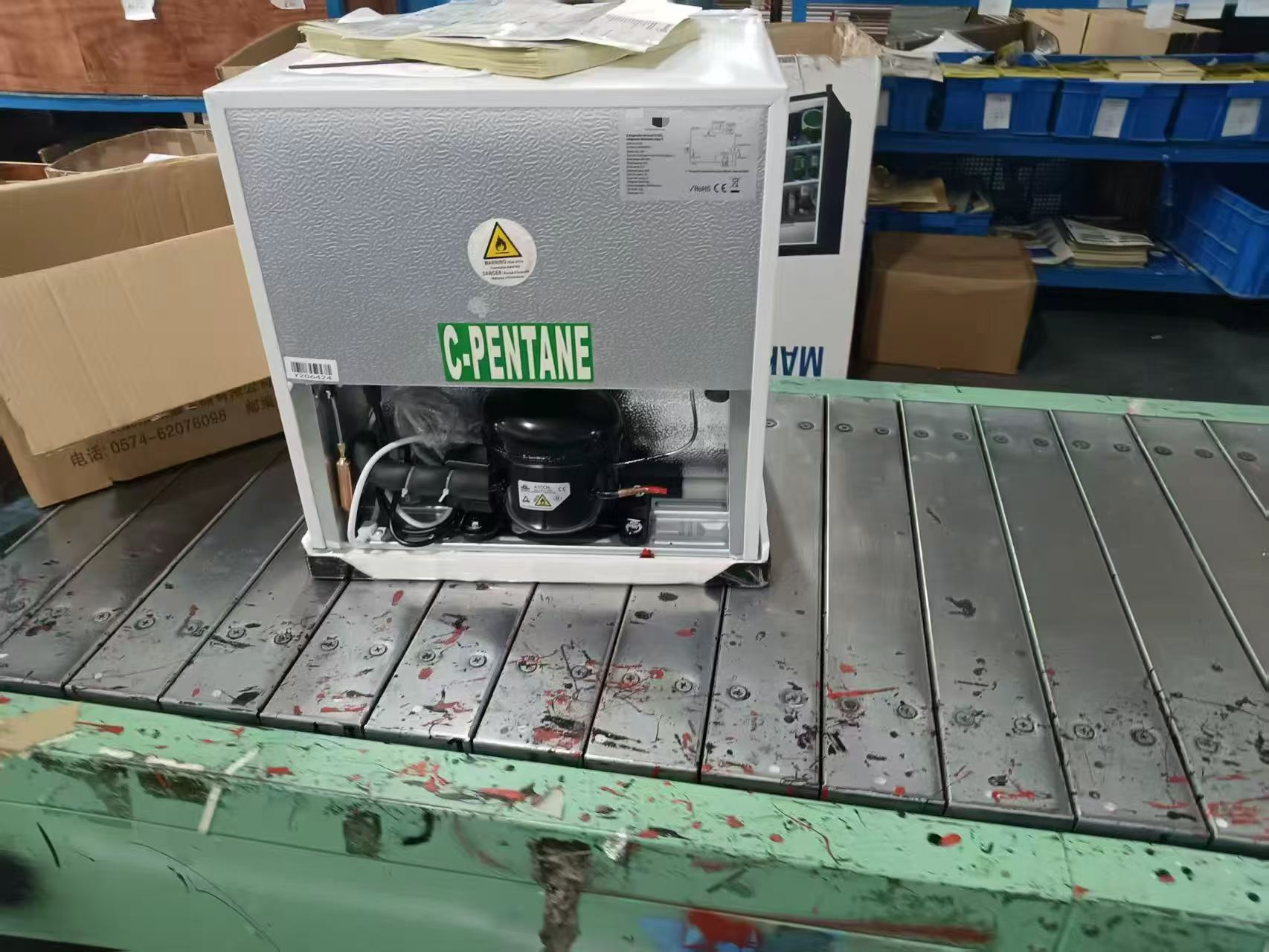
| Foaming Insulation | Lower-density PU foam | Higher-density cyclopentane-based PU foaming | Insulation quality affects heat transfer and energy performance. |
| Door Gasket | Standard PVC sealing solution | Magnetic multi-chamber TPE/PVC gasket options | A reliable seal helps maintain cabinet temperature and reduce air leakage. |
| Internal Liner | Standard plastic liner | Food-grade HIPS or other specified materials | Material selection affects durability, appearance, temperature resistance, and compliance requirements. |
The exact specification should be determined according to the product’s target market and certification requirements.
Compressor Selection
The compressor is a critical component of any refrigeration system. Buyers should confirm the compressor brand and model, cooling capacity, efficiency characteristics, refrigerant compatibility, operating conditions, noise requirements, and availability of replacement parts.
For international OEM projects, compressor selection should also be considered together with local voltage, frequency, ambient temperature, and energy-efficiency requirements.
Insulation and Foaming
Polyurethane foam insulation helps reduce heat transfer through the refrigerator cabinet.
The source material for this guide identifies 38–40 kg/m³ as a high-density foaming specification used for certain refrigeration OEM configurations, with a wall thickness of 60–80 mm. These figures should be treated as project-specific engineering specifications rather than universal requirements for every refrigerator model.
For buyers, the important point is to confirm the actual insulation material, density, thickness, foaming process, and resulting thermal performance of the model being purchased.
Door Gaskets
The door gasket creates the sealing interface between the refrigerator cabinet and door.
Poor sealing can contribute to air leakage, frost formation, temperature instability, and higher energy consumption.
For commercial refrigeration products, buyers may also want to consider whether the gasket can be replaced easily during maintenance.
3. R600a and R290: What Refrigerant Should Buyers Consider?
Refrigerant selection is another important part of refrigeration OEM sourcing.
The appropriate refrigerant depends on the product category, system design, safety requirements, environmental regulations, and target market.
R600a (Isobutane) is widely used in residential refrigeration applications, while R290 (Propane) is used in various commercial refrigeration and cooling applications.
However, buyers should not select a refrigerant simply because it is commonly used in a particular product category.
The manufacturer should confirm:
-
Refrigerant type
-
Refrigerant charge
-
Compressor compatibility
-
System design
-
Safety requirements
-
Applicable regulations
-
Certification implications
-
Target-market requirements
For private-label refrigeration projects, any change to the refrigeration system or major components should be evaluated for its potential impact on testing and certification.
4. How Do Refrigerator Energy Efficiency and Insulation Affect OEM Sourcing?
Energy efficiency has become an important procurement consideration for both residential and commercial refrigeration. A refrigerator’s energy performance is influenced by multiple factors rather than one individual component, including compressor efficiency, refrigerant system design, cabinet insulation, door sealing, temperature control, defrost system, fan operation, product capacity, and ambient operating conditions. For this reason, buyers should request actual energy-performance documentation for the specific model they intend to purchase rather than relying only on general claims that a product is “energy efficient.” European buyers, for example, may need to consider the applicable EU energy-label framework for refrigerators and freezers, while buyers in the United States may need to evaluate applicable U.S. Department of Energy requirements and other relevant labeling or efficiency programs. The exact requirements should be confirmed according to the final product, destination market, and applicable regulations. For an OEM refrigerator manufacturer, buyers should also confirm whether a customized version remains covered by existing certification or requires additional testing.
Energy Labeling Requirements
Energy-label requirements vary by destination market and product category.
European buyers, for example, may need to consider the applicable EU energy-label framework for refrigerators and freezers. Buyers in the United States may need to evaluate applicable U.S. Department of Energy requirements and other relevant labeling or efficiency programs.
The exact requirements should be confirmed according to the final product, destination market, and applicable regulations.
For an OEM refrigerator manufacturer, the buyer should also confirm whether a customized version remains covered by the existing certification or requires additional testing.
5. Residential Refrigerators vs. Commercial Refrigeration: What Is the Difference for Buyers?
Product application should be defined before selecting a refrigeration manufacturer.
Residential refrigerators are generally designed for household food storage, while commercial refrigeration products may be designed for supermarkets, convenience stores, restaurants, beverage brands, grocery businesses, and other commercial environments.
The procurement priorities can therefore be different.
| Product Category | Typical Capacity | Typical Application | Key B2B Considerations |
|---|---|---|---|
| Compact Single-Door / Mini Refrigerator | 45–120 L | Hotels, dormitories, offices, RVs | Compact dimensions, energy use, noise, loading efficiency |
| Double-Door Refrigerator | 180–350 L | Residential households and apartments | Storage configuration, energy efficiency, appearance, retail positioning |
| Chest Freezer | 100–500 L | Grocery storage, butcheries, commercial kitchens | Freezing performance, insulation, capacity, durability |
| Glass-Door Beverage Cooler | 120–450 L | Supermarkets, convenience stores, beverage brands | Temperature stability, visibility, merchandising, commercial operation |
These capacity ranges are useful for initial product planning. Final specifications and container-loading quantities should always be confirmed according to the exact model and packaging dimensions.
6. How Many Refrigerators or Freezers Fit in a 40HQ Container?
Container loading efficiency can have a significant impact on the landed cost of bulk home appliances.
The number of units that can be loaded into a 40HQ container depends on the product dimensions, packaging size, stacking method, container configuration, and loading plan.
The following ranges from the original procurement material can be used for preliminary planning:
| Product Category | Indicative 40HQ Loading Quantity |
|---|---|
| Compact Single-Door / Mini Refrigerator | ~420–580 units |
| Double-Door Refrigerator | ~120–160 units |
| Chest Freezer | ~110–190 units |
| Glass-Door Beverage Cooler | ~80–140 units |
These figures should not be treated as fixed loading guarantees. Before placing an order, buyers should request a packing list and container-loading calculation based on the final model and carton dimensions.
For a wholesale refrigerator supplier or commercial freezer factory in China, providing clear packing dimensions and loading calculations can help buyers compare suppliers on a more realistic landed-cost basis.
7. What Quality Control Tests Should an OEM Refrigerator Factory Perform?
Quality control should be evaluated at the product level.
For refrigeration products, buyers should ask what tests are performed during production and before shipment, what equipment is used, and whether the test results can be documented.
Depending on the product and applicable standards, relevant areas may include:
Energy Consumption Testing
Energy consumption can be evaluated under specified ambient conditions to verify the product’s performance against applicable market requirements.
The original KEYCOOL technical material identifies testing under 25°C and 32°C ambient conditions as part of its refrigeration energy evaluation process.
Refrigeration System Leak Testing
Refrigeration-system integrity is critical because leakage can affect cooling performance and product reliability.
The original technical material identifies leak detection for evaporator and condenser connections as part of the quality-control process.
Pull-Down and Temperature Recovery Testing
Freezers and commercial refrigeration equipment need to reach and maintain their specified operating temperatures.
Testing can therefore evaluate how quickly a product reaches the required temperature and how effectively it recovers after temperature changes.
For B2B buyers, the key questions are:
What is tested?
When is it tested?
What is the acceptance standard?
Can the manufacturer provide the relevant test records?
These questions provide a much clearer picture of factory quality control than simply asking whether the supplier has a “strict QC system.”
8. What OEM and Private Label Customization Can a Refrigerator Manufacturer Provide?
For importers and brands developing their own refrigeration products, OEM customization may extend beyond adding a logo.
Depending on the manufacturer’s capabilities, customization may involve:
-
Brand logo
-
Product labels
-
Carton packaging
-
Product color
-
Cabinet appearance
-
Capacity
-
Internal configuration
-
Refrigeration system
-
Components
-
Accessories
-
User manuals
-
Market-specific specifications
Some projects may also require tooling, engineering changes, sample development, certification testing, or customized production processes.
This is why buyers should define their customization requirements before asking for a final quotation.
A useful OEM brief should include:
Target market + Product type + Capacity + Technical requirements + Branding + Packaging + Estimated quantity + Certification requirements
The more complete the brief, the easier it is for the manufacturer to evaluate feasibility and prepare an accurate quotation.
9. How Should Buyers Choose an OEM Refrigerator Manufacturer in China?
Price is only one part of supplier selection.
For an international buyer, a practical supplier evaluation should cover at least six areas:
| Evaluation Area | Questions to Ask |
|---|---|
| Manufacturing | Is the company a direct manufacturer? What products are produced in-house? |
| Product | Does the model match the target market and application? |
| OEM/ODM | What level of customization is actually available? |
| Quality | What tests are performed and documented? |
| Commercial Terms | What are the MOQ, price, lead time, payment terms, and loading quantity? |
| After-Sales | What warranty, spare parts, and technical support are available? |
A supplier that performs well across these areas is generally easier to work with over the full product lifecycle.
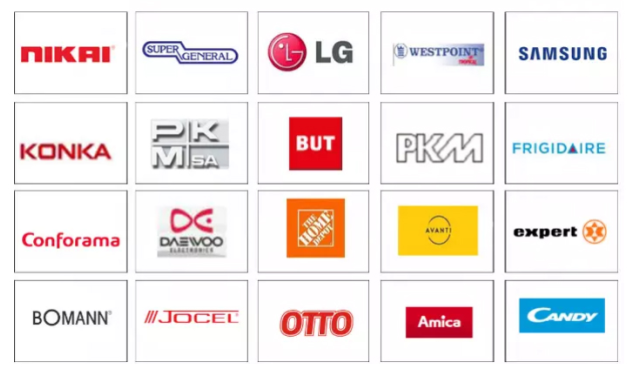
For distributors and private-label brands, this long-term capability can be particularly important because changing suppliers after a product has entered the market can involve new tooling, packaging, certification, samples, inventory, and customer-service processes.
10. What Should Buyers Ask a Commercial Freezer or Beverage Cooler Supplier?
Commercial refrigeration projects often have more specific operating requirements than residential products.
Before selecting a commercial freezer factory in China or beverage cooler exporter, buyers should clarify:
-
Intended application
-
Required temperature range
-
Ambient operating temperature
-
Capacity
-
Compressor specification
-
Refrigerant
-
Insulation specification
-
Door configuration
-
Glass type
-
Lighting
-
Shelving
-
Controller
-
Energy consumption
-
Certification
-
Packaging
-
MOQ
-
Spare parts
-
Warranty
-
Production lead time
For beverage brands and supermarket customers, appearance and merchandising functionality may also be important. A glass-door beverage cooler is often part of the retail presentation, so visibility, internal lighting, shelf configuration, branding, and product placement can influence the commercial value of the equipment.
11. How Can Importers Reduce Risk Before Placing a Bulk Order?
A structured sourcing process can reduce the risk of selecting a supplier based only on catalog appearance or quotation price.
A typical B2B refrigeration procurement process can follow this sequence:
Requirement Definition → Supplier Screening → Technical Evaluation → Quotation → Sample → Factory Verification → Order Confirmation → Mass Production → Inspection → Shipment
At the supplier-screening stage, buyers can compare manufacturing capability, product categories, export experience, certifications, and OEM services.
During technical evaluation, the focus should move to product specifications, components, refrigeration system, energy performance, packaging, and target-market requirements.
Before mass production, sample approval and factory or third-party inspection can provide additional verification.
This process is particularly useful for large-volume bulk refrigerator orders, wholesale chest freezer purchases, commercial refrigeration projects, and private-label appliance programs.
KEYCOOL Refrigeration OEM & ODM Manufacturing
For international buyers looking for a refrigerator OEM manufacturer, commercial freezer factory, or private-label refrigeration supplier in China, KEYCOOL provides OEM/ODM manufacturing solutions for residential and commercial appliance projects.
The company provides refrigeration products for different applications and supports international buyers with product selection, customization, quality control, production, packaging, and shipment coordination according to project requirements.
KEYCOOL’s refrigeration OEM capabilities can be evaluated around the same areas covered in this guide:
Product configuration → Component selection → Cooling system → Insulation → Quality testing → OEM customization → Bulk production
For buyers developing a private-label refrigerator or freezer line, the project can begin with an existing product platform and then be adapted according to the target market, product positioning, branding, packaging, and technical requirements.
For larger projects, buyers can also discuss product development, customized specifications, spare parts, and long-term supply planning with the manufacturing team.
Frequently Asked Questions About Refrigerator and Freezer OEM Sourcing
What should I look for in an OEM refrigerator manufacturer?
Evaluate the manufacturer’s product capability, cooling systems, core components, quality-control procedures, certifications, OEM customization options, MOQ, production capacity, lead time, spare-parts support, and export experience.
What is the difference between No-Frost and Direct Cool refrigerators?
No-Frost systems use fan-assisted air circulation and automatic defrosting, while Direct Cool systems generally use a simpler static cooling structure and may require manual defrosting. The appropriate option depends on product positioning, target market, and cost requirements.
Which refrigerant is commonly used in refrigerators and commercial freezers?
R600a is widely used in residential refrigeration, while R290 is used in various commercial refrigeration applications. The correct refrigerant depends on the product design, safety requirements, regulations, and target market.
How many refrigerators fit in a 40HQ container?
The loading quantity depends on the exact product dimensions and packaging. As an initial planning reference, the original KEYCOOL procurement data indicates approximately 120–160 double-door refrigerators or 110–190 chest freezers per 40HQ container for the specified product ranges. Final loading quantities should be confirmed using the actual carton dimensions and loading plan.
What is the MOQ for OEM refrigerators?
MOQ varies by product model, customization requirements, production planning, and supplier. Buyers should request the MOQ for the specific model rather than relying on a general supplier-wide MOQ.
Can a refrigerator manufacturer provide private-label customization?
Yes, depending on the manufacturer. Private-label projects can include branding, packaging, product labels, appearance, selected specifications, and other agreed customizations. More extensive changes may require engineering, tooling, testing, or certification review.
What certifications do refrigerators and freezers need?
Certification and regulatory requirements depend on the destination market and product category. Buyers should identify the target country before finalizing product specifications and confirm the applicable requirements with the manufacturer and relevant regulatory or certification bodies.
How should I compare refrigerator suppliers in China?
Use the same product specifications and RFQ for each supplier, then compare manufacturing capability, components, quality control, certifications, MOQ, pricing, container loading, lead time, warranty, spare parts, and OEM customization.
Start Your Refrigeration OEM Project with KEYCOOL
Whether you are sourcing residential refrigerators, chest freezers, commercial beverage coolers, or private-label refrigeration products, supplier selection should begin with the product requirements of your target market.
Share your product category, capacity, target market, estimated order quantity, OEM requirements, and certification needs with KEYCOOL to discuss the appropriate manufacturing solution for your project.
KEYCOOL — OEM & ODM Refrigeration Manufacturing for Global Buyers.
Author Card — Ashley Chen · Keycool

Post time: Nov-11-2026